Best Online Workout Programs to Transform Your Fitness in 2026
The New Era of Digital Fitness Has Arrived
The fitness world has undergone a massive shift over the past few years, moving from crowded gym floors to the convenience of personal screens. Millions of people around the globe are now discovering that achieving their ideal body does not require a gym membership or a personal trainer standing beside them. The rise of online workout programs has completely rewritten the rules of how people exercise, making world-class training accessible to anyone with an internet connection. Whether you are a complete beginner trying to shed a few pounds or a seasoned athlete chasing performance goals, digital fitness has something powerful waiting for you. The barriers of location, time, and cost have been shattered, and a new era of flexible, results-driven training is fully in motion.
Why People Are Ditching Gyms for Digital Training
Traditional gyms come with a laundry list of friction points — monthly fees, commute time, crowded equipment, and rigid class schedules. Digital fitness removes every single one of those barriers. You can press play on a strength session at 5 AM in your living room, pause it to handle a child, and resume without judgment. The flexibility alone has been enough to pull tens of millions of people away from conventional training environments for good.
Beyond convenience, the quality of digital fitness content has exploded. Expert trainers, sports scientists, and certified coaches now produce studio-quality video content that rivals anything you would find inside a premium health club. From HIIT and strength training to yoga, Pilates, and mobility work, digital platforms deliver structured, progressive programs designed to produce real results. Many platforms also include nutrition guidance, community support forums, and performance tracking tools that make the experience far more holistic than simply showing up to lift weights.
What Makes a Great Online Workout Program
Not every digital fitness platform is built equal, and knowing what to look for saves both time and money. The best programs are built around progressive overload — meaning the workouts get more challenging over time to keep your body adapting and growing stronger. Without progression, the body adapts, plateaus, and stops changing. A good program accounts for this and builds structured difficulty into every phase.
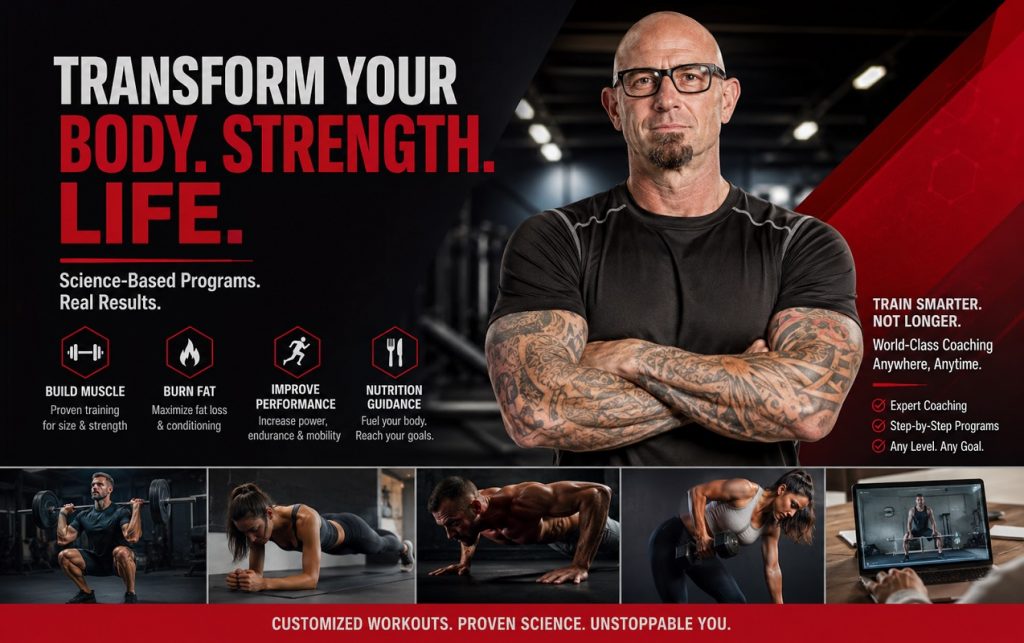
Coaching quality is the second major pillar. The trainer or coach behind the camera should be able to break down form and technique clearly, explain the purpose of each exercise, and motivate participants without resorting to gimmicks. Credentials matter — look for certified personal trainers, registered dietitians, and coaches with documented expertise in their field. Jim Stoppani, Ph.D., for example, is a sports scientist who has developed deeply researched training protocols backed by decades of peer-reviewed work in exercise physiology.
Variety and customization are equally important. Fitness is not one-size-fits-all. A strong platform will offer programs segmented by goal — fat loss, muscle building, athletic performance, endurance — as well as by training level and equipment availability. The more a program can be tailored to your specific situation, the more likely you are to stay consistent and see results.
Strength Training Through Online Platforms
Strength training has emerged as one of the most popular categories in digital fitness, and for good reason. Building lean muscle mass increases metabolic rate, improves bone density, protects joints, and transforms body composition in ways that cardio alone simply cannot replicate. Online workout programs dedicated to strength training typically follow structured splits — push/pull/legs, upper/lower, full-body — and prescribe specific sets, reps, and rest periods designed to maximize hypertrophy and progressive overload.
Platforms like Jim Stoppani’s JimStoppani.com offer highly detailed strength programs that include exercise demonstrations, scientific rationale for programming choices, and supplement guidance. The level of education embedded in these programs means users are not just following a routine blindly — they are learning why each movement is selected, how to execute it safely, and how it contributes to the broader training goal. This educational layer dramatically improves adherence and long-term results.
For beginners, a foundational strength program that focuses on compound lifts — squats, deadlifts, bench press, rows, and overhead presses — provides the most efficient path to building a strong base. For intermediate and advanced lifters, more sophisticated programming involving periodization, tempo manipulation, and specialized techniques like drop sets and supersets becomes necessary to continue driving adaptation.
HIIT and Cardio: Getting Lean without a Treadmill
High-intensity interval training has dominated digital fitness for years, and its popularity shows no signs of fading. HIIT alternates short bursts of maximum effort with brief recovery periods, creating a significant cardiovascular and metabolic challenge in a fraction of the time required by steady-state cardio. A 20-minute HIIT session can elevate your metabolism for hours after training, making it one of the most time-efficient fat-burning methods available.
Online workout programs centered on HIIT typically require little to no equipment, making them ideal for small spaces and travel. Bodyweight exercises like burpees, jump squats, mountain climbers, and plyometric lunges serve as the foundation, though kettlebells and resistance bands can be incorporated for added intensity. The digital format works exceptionally well for HIIT because the trainer on screen can guide pacing, count intervals, and keep energy levels high throughout each brutal round.
Many platforms now blend HIIT with strength training in formats sometimes called metabolic resistance training — a hybrid approach that builds muscle while burning fat simultaneously. These hybrid programs are particularly popular among people with limited training time who need to balance body composition goals with cardiovascular health.
Yoga, Mobility, and Recovery in the Digital Space
Fitness is far more than lifting heavy and sprinting hard. Recovery, mobility, and flexibility are equally critical components of a well-rounded training life, and the digital fitness world has embraced this reality with an impressive range of yoga and mobility-focused content. Whether you need a deep hip flexor release after a long day of sitting or a full restorative yoga flow to decompress after a heavy training week, these resources are available at the tap of a screen.
Yoga, in particular, has thrived in the online format. Instructors like Adriene Mishler of Yoga with Adriene have built communities of millions of loyal practitioners through YouTube and subscription platforms by combining genuine teaching skill with warm, accessible personalities. The asynchronous nature of digital yoga — where you can practice at any time without booking into a class — suits modern lifestyles perfectly.
Mobility work, championed by physical therapists and movement coaches online, addresses the muscular imbalances and restricted joint ranges that accumulate from sedentary modern life. Regular mobility training reduces injury risk, improves athletic performance, and simply makes day-to-day movement feel better. Integrating dedicated mobility sessions into a digital fitness routine is one of the highest-leverage investments any exerciser can make.
How to Choose the Right Program for Your Goals
With hundreds of platforms and thousands of programs competing for your attention, decision fatigue is real. The smartest approach is to anchor your choice to your primary fitness goal. If fat loss is the priority, look for a program that combines resistance training with cardiovascular work and includes nutritional guidance. If building muscle is the mission, prioritize platforms with structured hypertrophy programming and strong coaching credentials. If athletic performance is the target, seek out sports-specific conditioning programs built by coaches with relevant experience.
Budget is a secondary but practical consideration. Many excellent online workout programs are available for free on YouTube, while premium platforms typically offer more structured, progressive, and personalized content for a monthly or annual subscription fee. The key is value — a ten-dollar-per-month subscription that keeps you consistent and progressing is infinitely more valuable than a free resource you never actually use.
Trial periods are your friend. Most reputable platforms offer free trials of one to two weeks, allowing you to test the interface, coaching quality, and program structure before committing financially. Use these trials aggressively. Sample the content, attempt a few workouts, assess how clearly the exercises are explained, and gauge whether the trainer’s style resonates with you personally.
Building Consistency: The Real Key to Fitness Success
The most perfectly designed program in the world delivers exactly zero results if it is never executed consistently. Consistency is the cornerstone of every fitness transformation story ever told, and online workout programs succeed precisely because they lower the barriers to showing up. When the gym is a thirty-minute drive in traffic, skipping a session is easy. When the gym is your living room and the session starts the moment you press play, excuses become much harder to manufacture.
Scheduling your workouts like calendar appointments dramatically improves follow-through. Decide in advance which days you will train, block that time in your calendar, and protect it with the same seriousness you would give a professional meeting. Lay your workout clothes out the night before, charge your device, and eliminate as much pre-training friction as possible.
Online workout programs also benefit enormously from accountability structures. Many platforms include community features — private Facebook groups, forum threads, leaderboards, or live check-ins — that connect you with other participants working toward similar goals. Shared experience creates social accountability, which research consistently identifies as one of the strongest predictors of long-term exercise adherence. Joining a community tied to your chosen program transforms solitary home training into a genuinely connected experience.
Progress tracking is another underutilized tool. Logging your workouts — weights lifted, reps completed, times recorded — gives you objective evidence of improvement over time. Seeing those numbers climb week after week is one of the most powerful motivational forces in fitness, reinforcing the habit loop and making it increasingly difficult to miss a session.
The Future of Fitness Is Already in Your Hands
Technology is accelerating what is already possible in digital fitness. Artificial intelligence is beginning to personalize workout programming in real time, adjusting intensity and exercise selection based on recovery data, performance metrics, and user feedback. Wearable devices are feeding live biometric data into fitness apps, creating feedback loops that make training smarter and safer than ever before. Virtual reality fitness experiences are emerging, turning exercise into immersive game-like environments that make sweating feel like play. The trajectory is unmistakable — online workout programs will only become more sophisticated, more personalized, and more effective as technology evolves. The tools available to digital fitness consumers today are already extraordinary by any historical standard. The only question left is whether you are ready to use them.